
Blog
Notes on building AI teams
Guides, product updates, and practical patterns — written for operators, not just engineers.
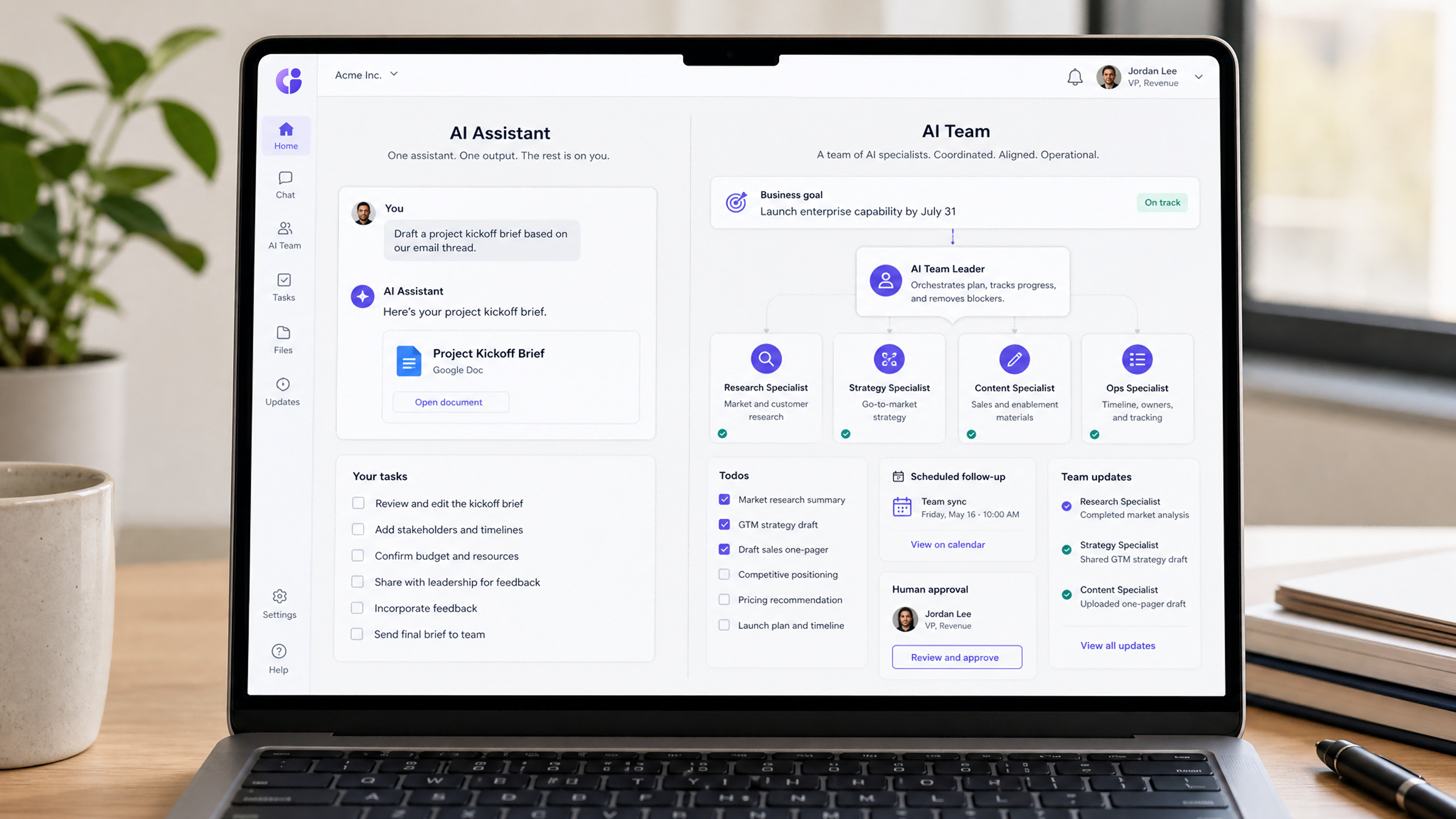
Why We Are Building AI Teams Instead of Another AI Assistant
This Company article explains why ClawTeams focuses on AI teams rather than another single AI assistant. It covers the limits of assistant-style work, the rise of agentic AI, the value of specialist AI employees, and the company belief that humans should set direction while AI teams absorb coordination and execution overhead.
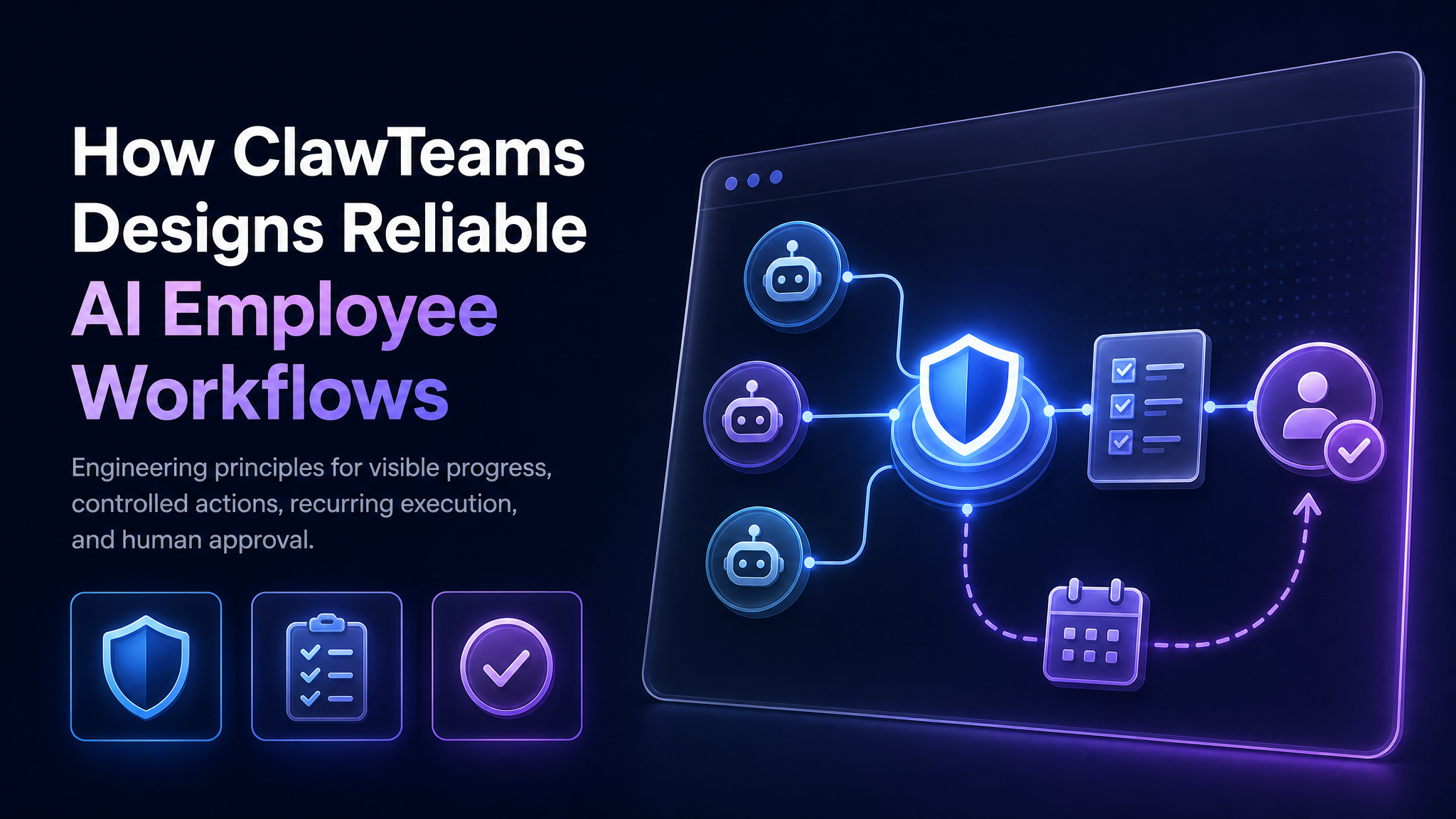
How ClawTeams Designs Reliable AI Employee Workflows
This Engineering article explains the public product principles behind reliable AI employee workflows in ClawTeams. It covers scoped roles, visible state, controlled actions, workplace coordination, recurring execution, and the high-level role of OpenClaw as a runtime foundation without exposing internal implementation details.
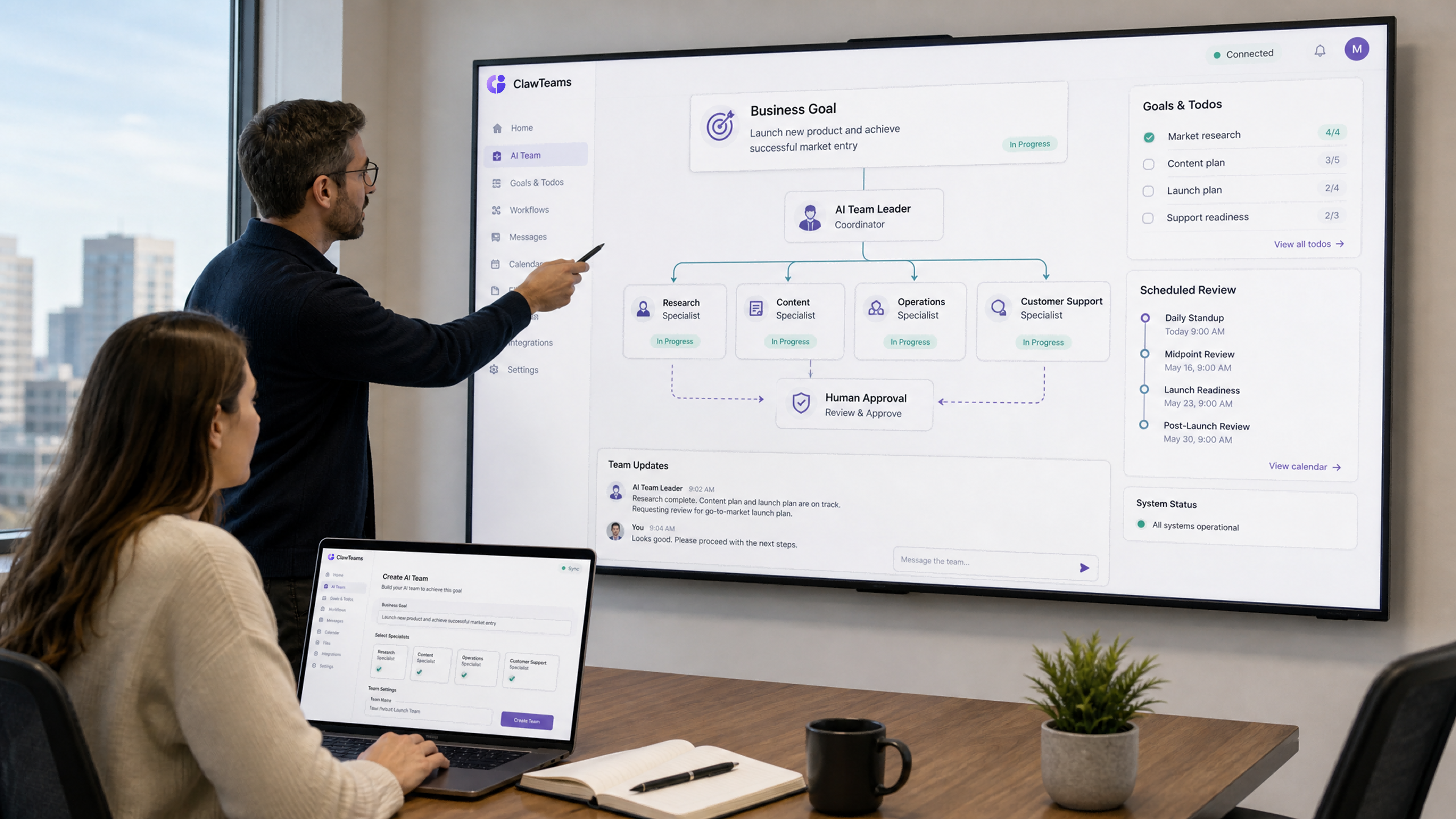
How ClawTeams Turns One Business Goal into an AI Team Workflow
This article explains how ClawTeams turns a business goal into an AI team workflow. It covers the role of an AI Team Leader, specialist AI employees, Goals & Todos, meetings, scheduled tasks, workplace messaging, and approval points that keep business work visible and controlled.
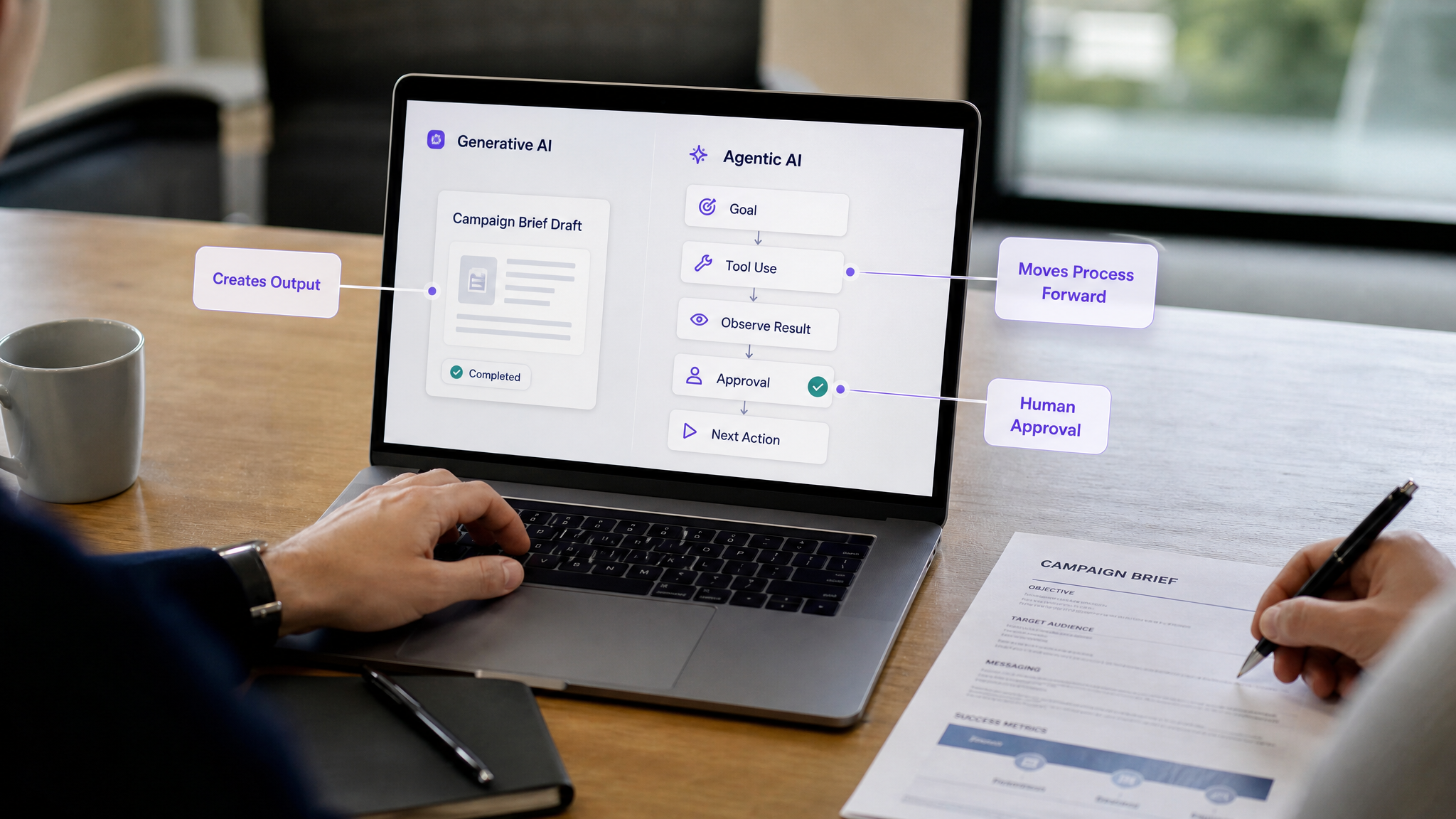
Agentic AI vs Generative AI: What Changes When AI Starts Taking Action?
This article explains how generative AI creates outputs while agentic AI moves defined processes forward. It compares their capabilities, examines autonomous AI agents and practical agent types, and shows when businesses need generation, agentic execution, or a controlled combination of both.
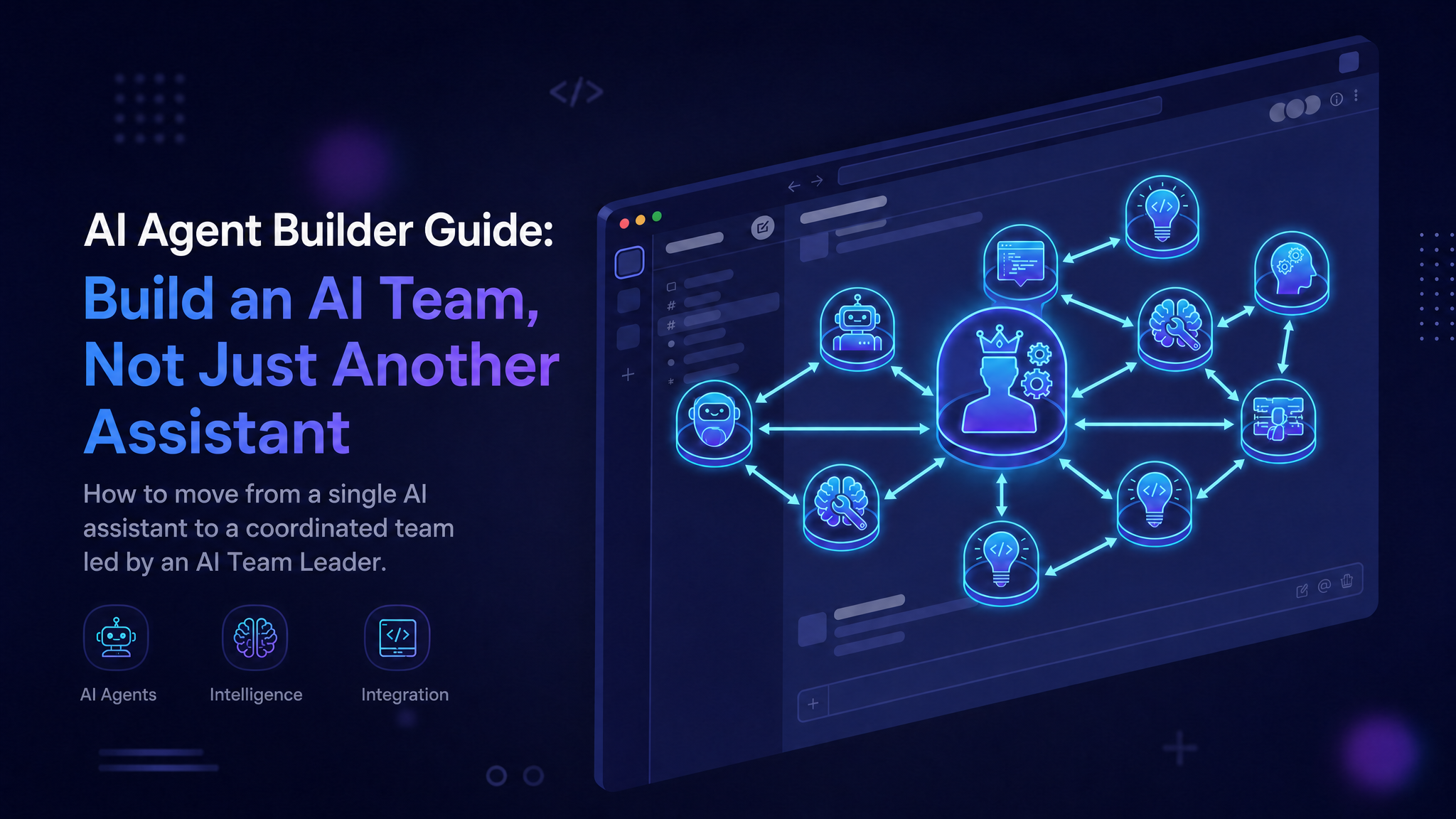
AI Agent Builder Guide: Build an AI Team, Not Just Another Assistant
This guide explains what an AI agent builder does, why one agent is often not enough for cross-functional business work, and how clear roles, shared context, recurring execution, workplace messaging, and human oversight turn specialist agents into a coordinated AI team.
When to add a reviewer agent to your workflow
How to approach when to add a reviewer agent to your workflow without overloading a single agent.
